On our theory of self-organisation
Move them to jostle and shear them to slide
Granules constantly rub and collide
Cells split and diffuse
Theorists to bemuse
But now we can see how they self-organise
RB, April 2019
The deeper concern running through all this work is how disordered many-body systems organise structure, transmit stress, evolve under driving, and admit reduced descriptions that are both physically honest and mathematically useful.
Granular matter is the main laboratory, but not the only one. The questions reach into soft condensed matter, cellular structures, porous materials, biological systems, and any setting where disorder, force mediation, and multiscale description matter.
The research spans four decades and includes both tightly focused theoretical programmes and broader excursions into fracture, polymers, complex fluids, and nonlinear media. The older programmes remain part of the intellectual map even when they are not currently the main focus.
Move them to jostle and shear them to slide
Granules constantly rub and collide
Cells split and diffuse
Theorists to bemuse
But now we can see how they self-organise
RB, April 2019
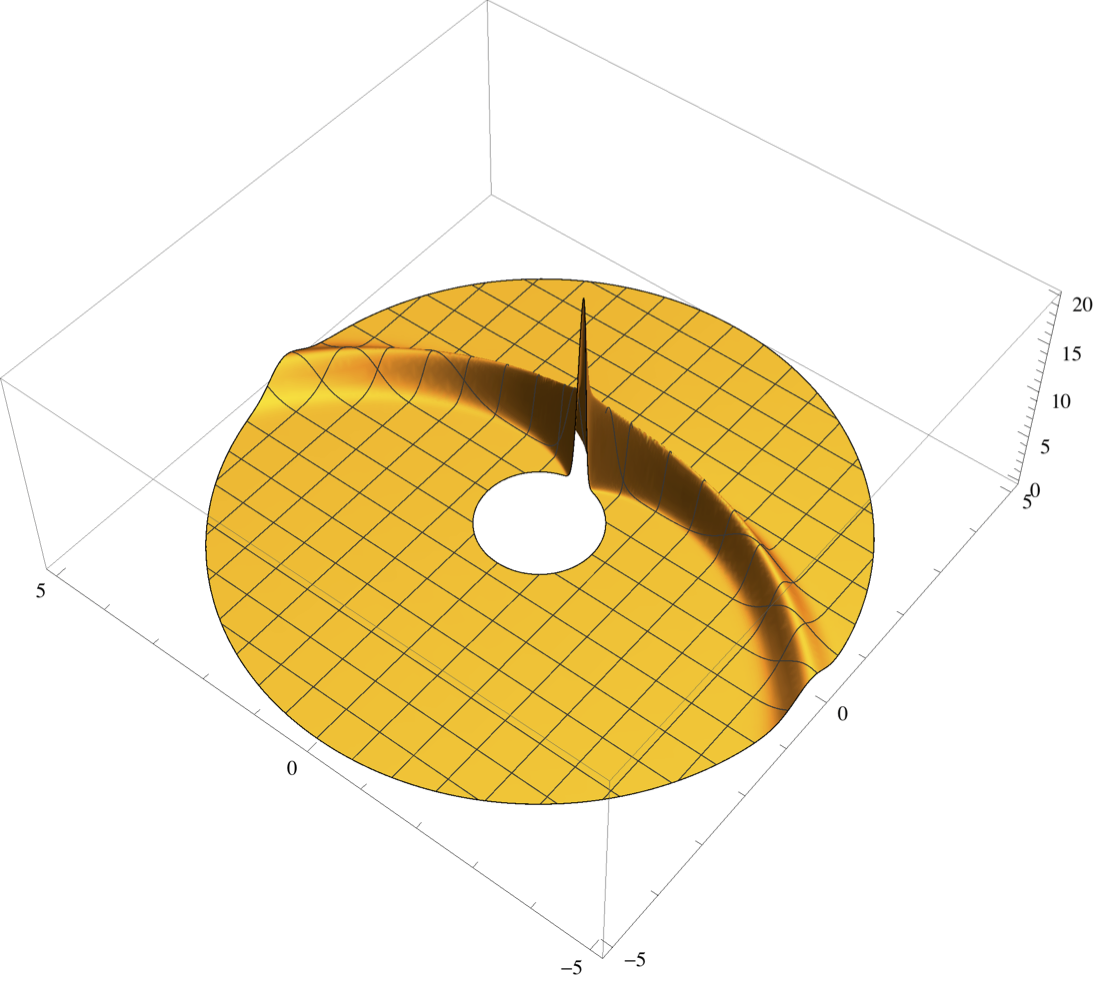
A first-principles approach to stress transmission in granular solids, treating force chains as structural consequences of the governing stress equations. Central ideas include isostatic stress states, marginal rigidity, coarse-graining from grain scale to continuum, and the two-phase composite picture of real granular materials.
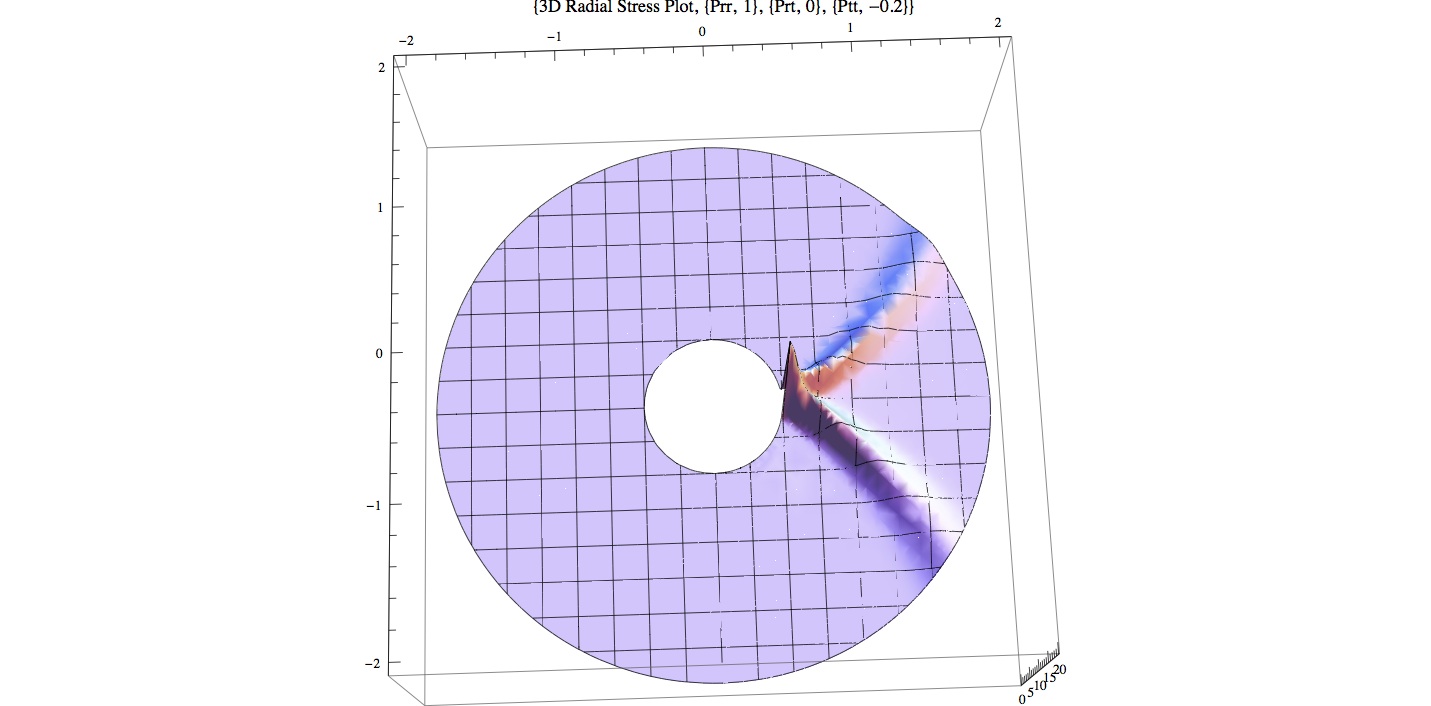
Can driven granular systems be described with something as principled as statistical mechanics? This programme investigates Edwards-style volume-stress ensembles, entropy, detailed balance in quasi-static steady states, and the distinction between typicality and mere possibility.
The "da Vinci fluid" model pushes a friction-dominated view of dense granular flow, where plug formation and catch-up dynamics emerge from the governing equations rather than being bolted on. Related work shows how a modified Archimedes law can survive inside granular media.
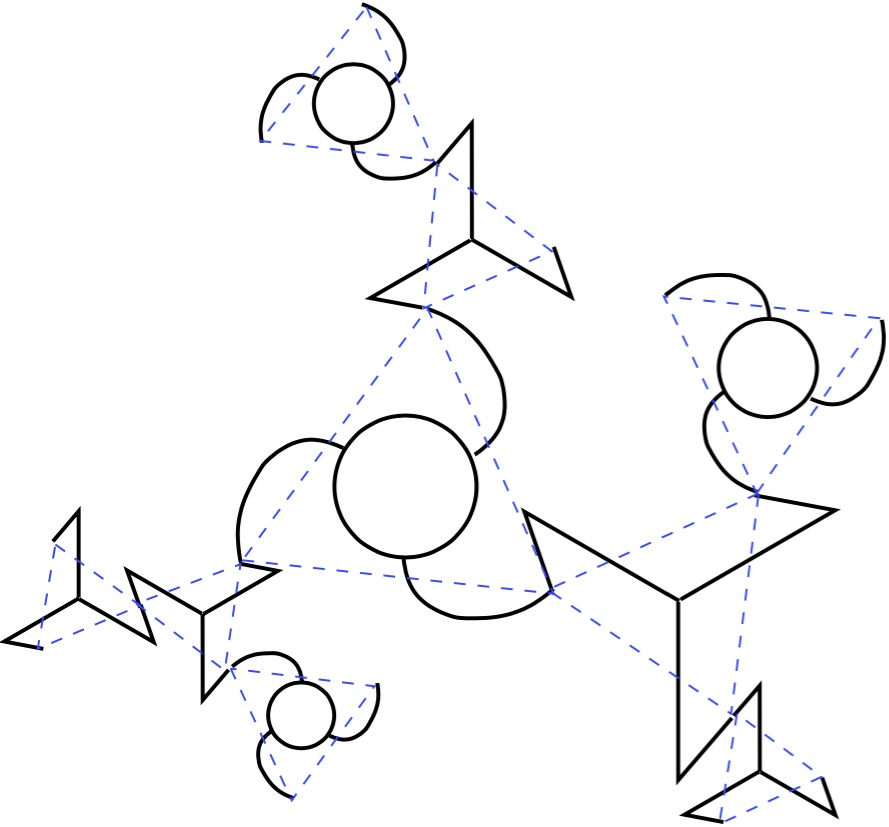
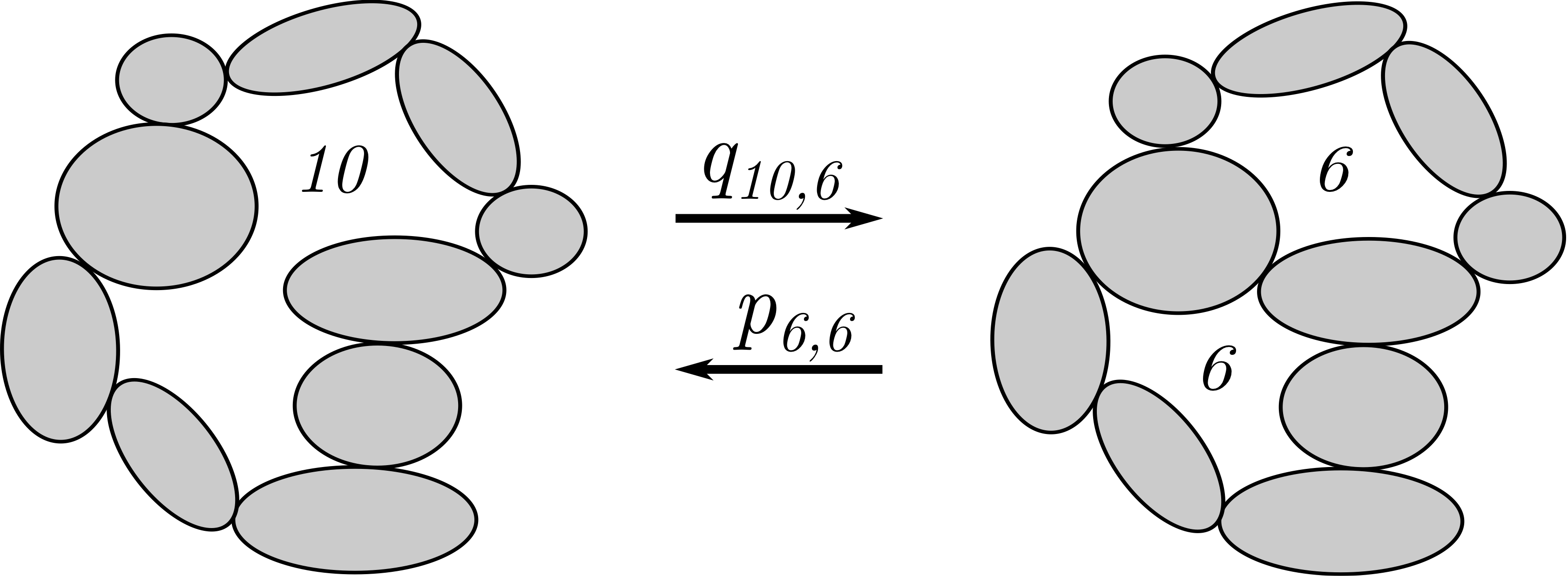
The same structural-statistical ideas extend to cellular systems, auxetic materials, porous structures, and biological problems where force mediation or structural transitions matter — including bacterial phase transitions and cell surface fluctuations.
The most promising unifying idea across the recent work is that self-organisation can be framed in terms of stability, disorder, and the selective survival of configurations — connecting the older granular-statistical programme to broader claims about driven systems.
Slow and fast cracking, Laplacian growth, fractal morphology, and the relation between dynamics and roughness. Substantial earlier programmes preserved in the archive.
Polymer chain pullout, complex fluids near the glass transition, porous-media transport, and multiscale coarse-graining methods.
Work on spin systems, nonlinear materials, and geometric curve dynamics showing the mathematical breadth behind the later granular emphasis.